Bring lighting, climate, smart locks, and home security together into one coordinated platform—configured around your household’s actual patterns, not factory defaults.
The appeal of smart home technology is real. The reality of buying devices piece by piece is not. A smart bulb from one brand, a thermostat from another, a lock from a third—each controlled by its own app, each operating on its own rules, each unaware of what the others are doing. The coordination you expected never materializes because the devices were never designed to share a platform.
For Harford County homeowners who have tried the piecemeal approach, the result is familiar: more apps, more manual steps, and a home that is technically “smart” in isolated parts while remaining manual everywhere else.
A properly integrated smart home automation system connects every component into a single platform—one interface, one set of rules, devices that actually respond to each other. When you leave for work, one action locks the doors, adjusts the thermostat, and arms the security system. When motion is detected outside at night, the exterior lights respond and the camera captures it. When you arrive home, the house knows.
We design these systems around the specific patterns of your household before installation begins. The automation logic is configured, tested, and ready before we hand it over—so it works correctly from the first day, not after weeks of manual adjustment.
Smart home automation works best when it was designed for your household from the start. The lighting schedules that work for a family with school-age children on a predictable routine look different from those that work for a couple with flexible remote work arrangements. Before specifying any hardware, we assess how your household actually operates—arrival and departure patterns, occupancy preferences, security priorities—and design the automation rules accordingly.
After installation, smart home platforms require minimal ongoing maintenance. Software updates are managed remotely. Seasonal schedule adjustments take minutes. When your household changes—a new family member, a schedule shift, an additional access credential needed—the platform accommodates the change without requiring new hardware or a reinstall.
Automate, schedule, or trigger lights based on motion, time, or system events. Convenience and security in one.
Smart thermostats that adjust to occupancy patterns, time of day, and seasonal schedules without manual intervention.
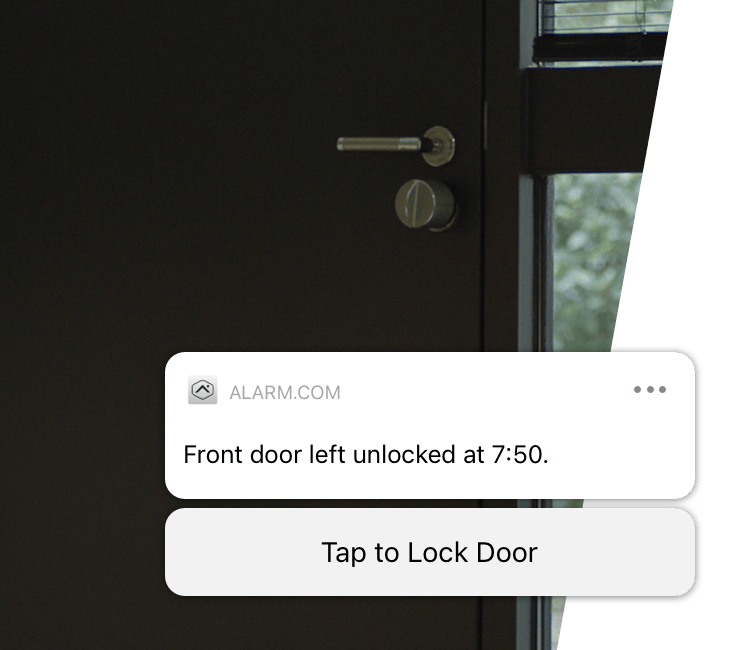
Every entry point managed from one platform. Remote lock and unlock, access codes, and activity logging unified with your automation system.
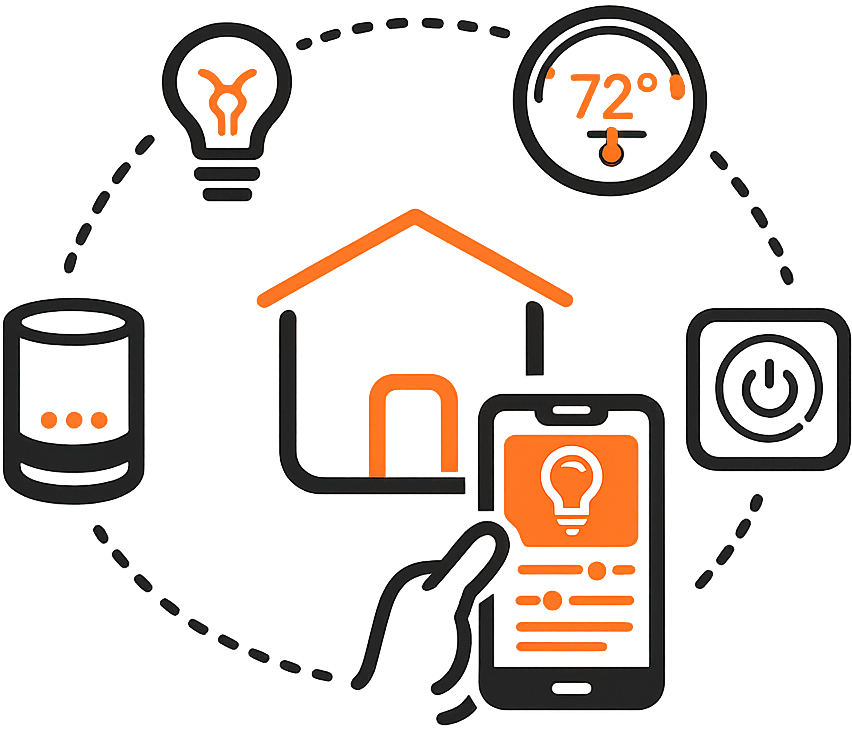
Automation and security share one platform—lights, locks, cameras, and sensors responding to the same events automatically.
Elite Home Security designs and installs smart home automation systems throughout Bel Air, Forest Hill, Fallston, and the surrounding Harford County and Baltimore County residential markets. We are familiar with the range of property types and household configurations in this area—from single-family homes in established Bel Air neighborhoods to larger properties with multiple entry points along MD-152 in Fallston to active family households near Abingdon’s Route 40 corridor.
Every automation system we design is based on a direct assessment of your specific home. We do not sell packages—we build platforms that reflect your household’s actual patterns and your property’s actual layout. Our locally based Harford County team installs every system directly and stays accessible for support and adjustments over the life of the system.
Lighting—scheduled, motion-triggered, or event-based. Thermostat and climate—occupancy-aware, seasonally adjusted. Smart locks—remote control, access codes, activity logs, automatic locking. Security cameras and alarm sensors—event-triggered and remotely monitored. Shades and blinds where installed. Scene modes like “Away,” “Night,” or “Movie” that adjust multiple systems simultaneously with a single command.
No—a properly integrated system actively strengthens it. Lights that respond to motion outside provide deterrence that adapts to actual events rather than following a predictable timer pattern. Locks that confirm their status in real time and engage automatically eliminate the uncertainty of relying on habit. A platform where cameras, sensors, and locks communicate with each other provides a fundamentally higher level of awareness than isolated devices.
In many cases, yes. We evaluate your existing cameras, locks, thermostats, and smart devices during the site assessment and identify what can connect to the platform we design. Compatible devices are incorporated to reduce replacement cost. Where devices are not compatible, we recommend replacements that will perform correctly in the integrated system.
Very little. Software updates are managed remotely for most platforms. Physical devices—particularly battery-powered sensors and fobs—require periodic battery replacement. Annual system checks confirm everything is communicating correctly. The system is designed to run without daily attention—the goal is that it handles routine household patterns invisibly, requiring input only for changes to schedules or access permissions.